
Why Great Communication Starts Long Before the Campaign
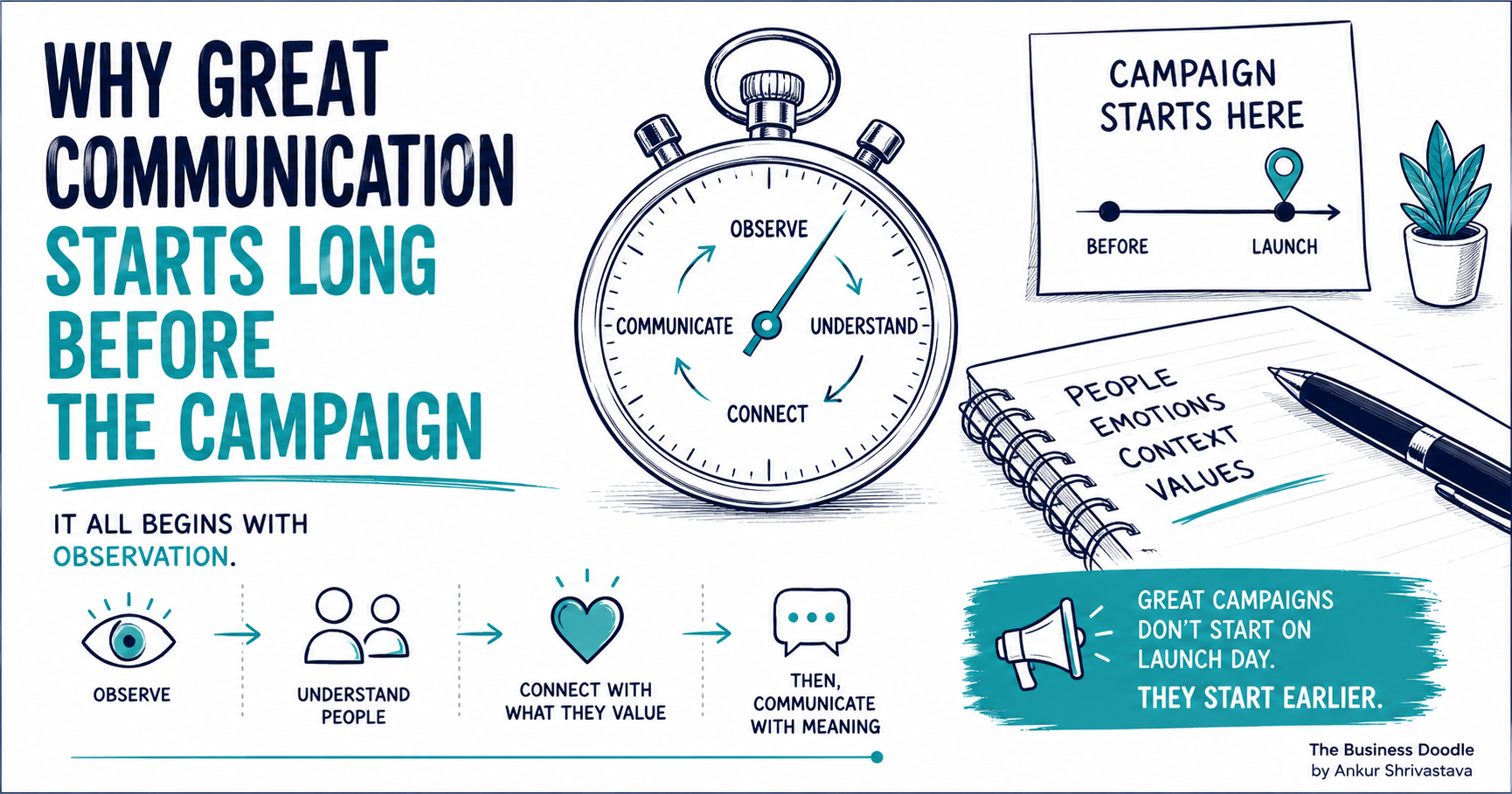
Some of my most valuable communication lessons have come from moments when I was not creating content.
While working on a waterfront development communication project for a municipal corporation, my responsibility was to think about how a large urban transformation project could become meaningful for citizens.
The first instinct in such projects is usually to communicate the visible aspects — infrastructure, development, timelines, and benefits.
But I started with a different question:
What does a river mean to people?
A river is not just water flowing through a city.
It is childhood memories.
It is a place where generations have spent time.
It is a connection between the past and the future.
That observation changed the way I approached the communication.
While exploring digital engagement possibilities, I noticed something small but interesting — there was no water emoji on WhatsApp.
That small observation became the idea for a citizen engagement activity where people were invited to imagine and create their own water emoji.
Another thought came from looking at the river through the eyes of the next generation.
Instead of making a conventional project film, I imagined a conversation between a five-year-old child and her grandfather.
The child asks:
"Was the river clean when you were young?"
The grandfather shares memories of playing near the river and swimming in it. The story created a bridge between what the river once was and the hope of what it could become again.
The campaigns connected because they were not built around a project.
They were built around people.
This experience reinforced a belief I carry today:
Great communication does not begin with content.
It begins much earlier.
With observation.
Understanding people.
Understanding their emotions.
Understanding what they value.
Because before we communicate with an audience, we need to first understand the world they live in.