Understanding Your Audience
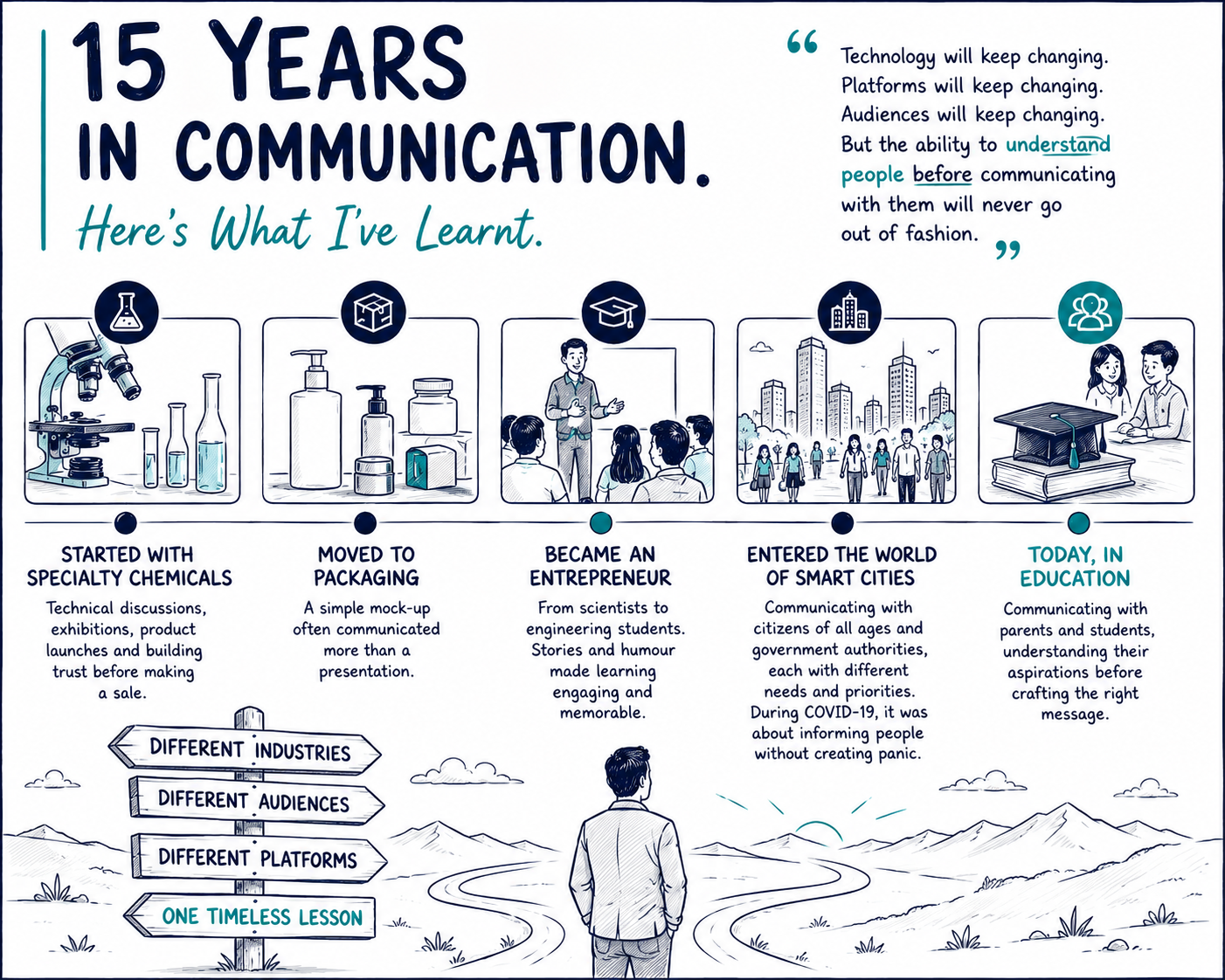
Fifteen years ago, communication for me meant standing at exhibitions like CPHI and HPCI, interacting with R&D scientists from companies like L'Oréal, P&G, Unilever, Cipla and Glenmark. It was technical discussions, product brochures, product launches, distributor meetings and building trust long before selling a specialty chemical.
Then I moved into the packaging industry.
The products changed.
So did the communication.
Now, a simple product mock-up often communicated more than a presentation. Customers weren't evaluating a cap or a pump—they were imagining what their brand could become.
Then came entrepreneurship.
Once again, communication changed.
This time, my audience was engineering students. Technical presentations no longer worked. I realised students learn and remember better when learning is engaging. Stories and humour became powerful communication tools.
A few years later, I entered the world of Smart Cities.
Communication became even more fascinating.
I wasn't communicating with one customer anymore.
I was communicating with children, youngsters, working professionals, senior citizens and government authorities—each with different priorities, different behaviours and different expectations. During COVID-19, the challenge wasn't just informing citizens, but doing it without creating panic. And while replicating campaigns across cities, I learnt that every city has its own language, culture and emotions. One message could never fit all.
Today, I work in the education sector.
The audience has changed once again.
Parents think differently.
Students decide differently.
And communication has evolved yet again.
Looking back, almost everything has changed.
The products.
The industries.
The audiences.
The platforms.
Technology will keep changing. Platforms will keep changing. Audiences will keep changing. But the ability to understand people before communicating with them will never go out of fashion.