
The Most Difficult Part of Communication Is Choosing What Not to Say
One of the most challenging communication assignments of my career came during the COVID-19 pandemic.
I was working on the digital communication initiatives for municipal corporations, managing the daily COVID-19 dashboards and citizen communication.
Every day, we had data that no one wanted to read.
New infections.
Hospital bed occupancy.
Containment zones.
Recoveries.
Fatalities.
The numbers had to be reported with complete accuracy. There was no question about that.
But then came the real communication challenge.
We weren't a newsroom.
Our responsibility wasn't to decide which statistic would make the biggest headline.
Our responsibility was to ask a different question:
"What information will help a citizen today?"
That changed everything.
Along with publishing transparent COVID data, we focused on communication that enabled action.
Where were hospital beds available?
How could people receive medicines and essential groceries at home through partners like Swiggy, Zomato, and Wellness Forever?
How could recovered patients volunteer as plasma donors?
Which helplines could citizens call immediately?
The data informed people.
The communication supported them.
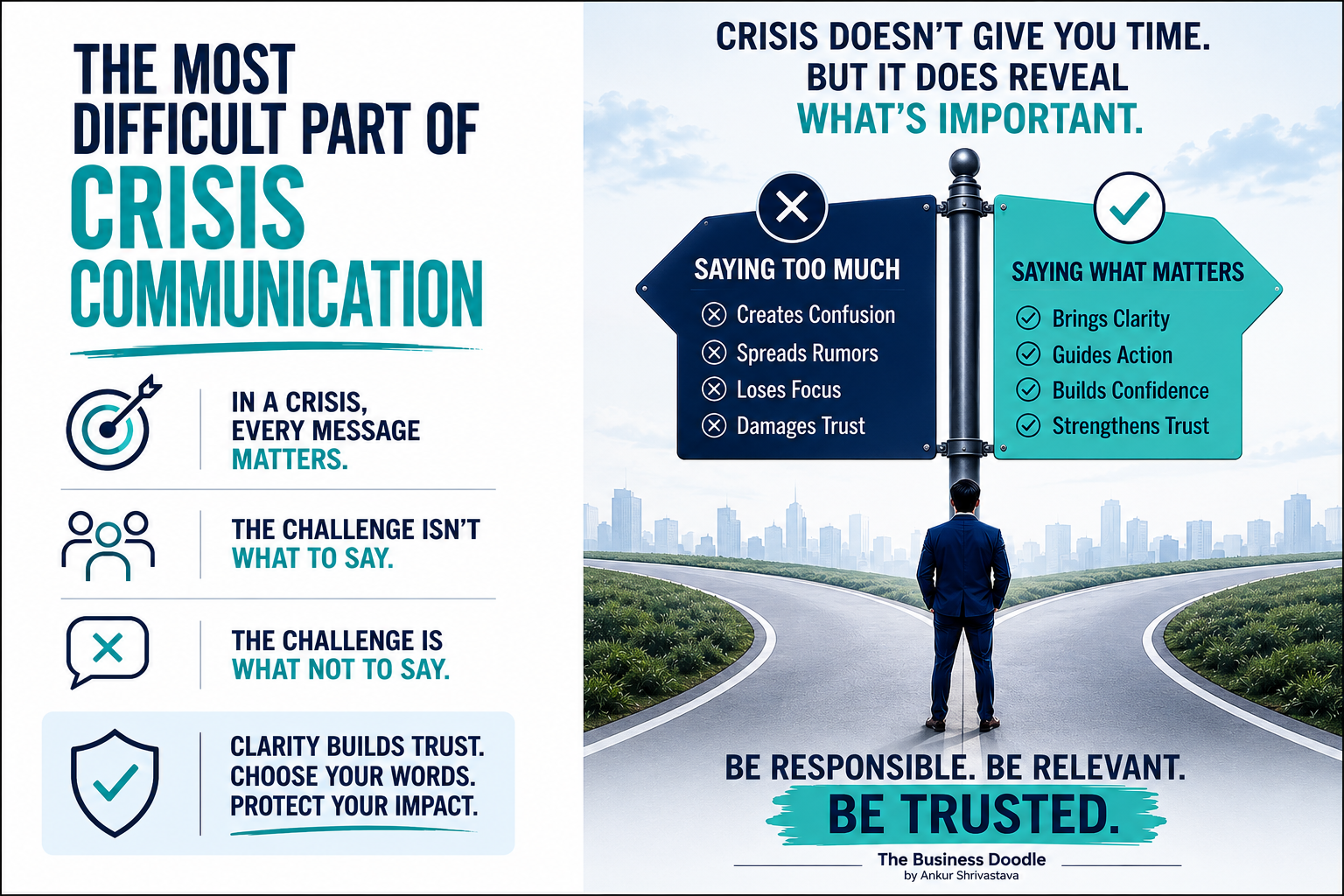
Looking back, I realise the most difficult communication decision wasn't what to publish.
The facts had to be published.
The real decision was what not to make the centre of every conversation.
We chose not to let fear dominate the communication.
Instead, we tried to ensure that every update also gave citizens something equally important—clarity, direction, and hope.
That experience changed the way I think about communication.
Sometimes the most responsible communication isn't about saying more.
It's about choosing what deserves the most attention.