
Marketing Keeps Scaling Instead of Growing Because Scaling Is the Only Lever It's Allowed to Pull
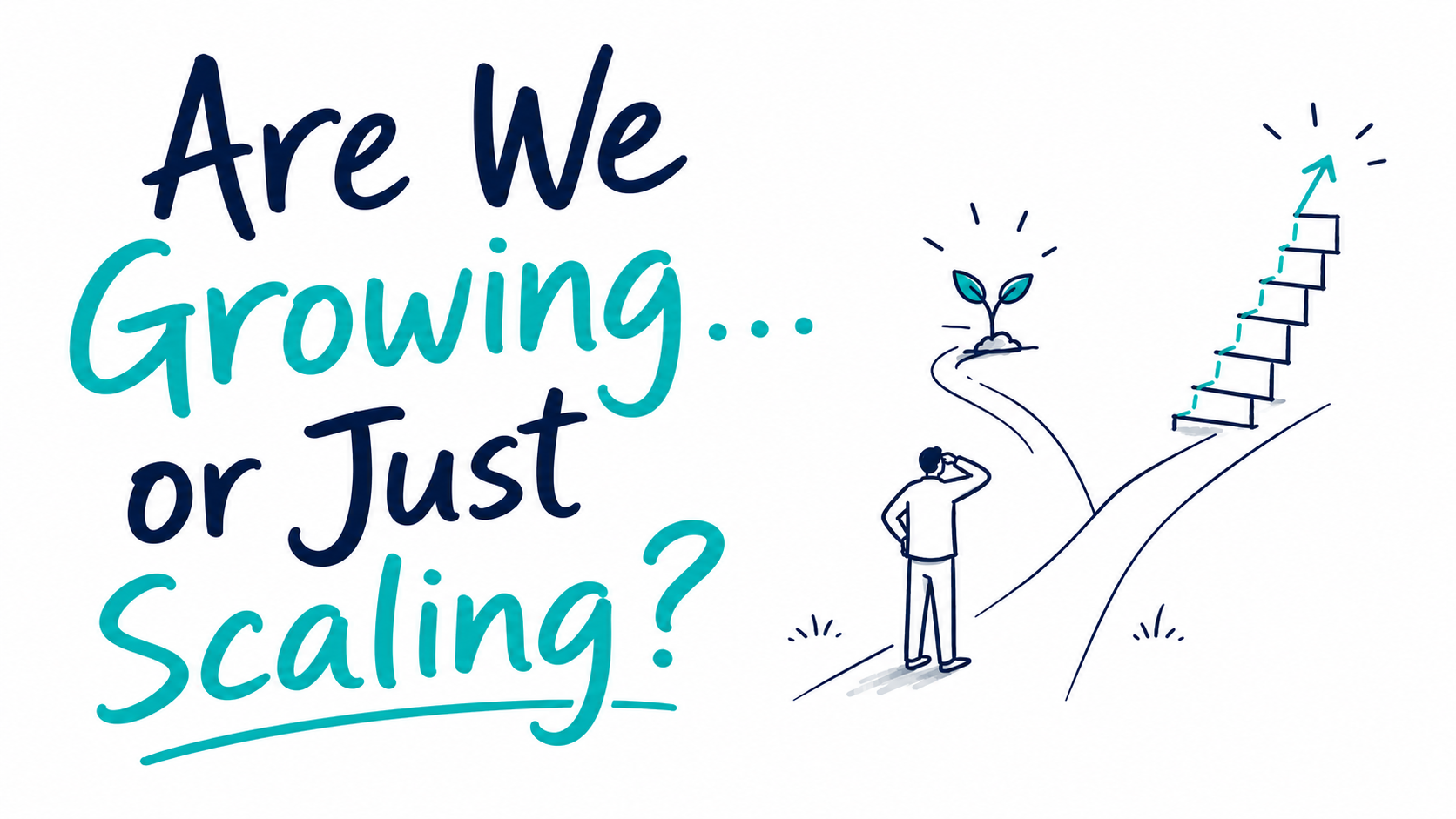
In admissions marketing, the response to a missed target is almost always the same. Increase the telecalling. Cover the entire accumulated database. Don't leave a single lead untouched. The logic isn't wrong — if a fixed percentage of walk-ins convert, more walk-ins should produce more admissions, and operationally, that holds up every time.
But I started asking a different question after watching this: are we actually growing, or are we just scaling the same process harder?
Volume and Conviction Are Different Problems, and Only One of Them Is Being Solved
Generating more leads, making more calls, and driving more walk-ins are all volume moves. They rarely touch the thing that actually decides an outcome — whether the parent evaluating the institution believes it's genuinely the right choice for their child. That belief doesn't come from how efficiently the CRM routes a lead. It comes from placements, faculty quality, a differentiated academic ecosystem, alumni outcomes, research opportunities — a clear, strengthening answer to one question: why this institution over every other option in front of them.
If that answer isn't getting sharper year over year, the only available growth strategy left is feeding more people into an unchanged funnel. The numbers will still move. But that's growth by doing more, not growth by becoming better — and those produce very different trajectories over time.
The Hidden Pattern: Marketing Scales Because Scaling Is the Only Lever Marketing Fully Controls
Here's the part that's easy to miss when this gets framed as a strategy failure. Increasing activity — more calls, more database coverage, more spend — is a lever marketing can pull entirely on its own, with no dependency on any other function. Increasing conviction depends on things marketing rarely owns outright: faculty quality, placement outcomes, curriculum differentiation, the actual academic experience being delivered. Those sit with admissions leadership, academic departments, and institutional strategy — functions marketing has to influence, not command.
So when a target is missed and a decision needs to be made this week, marketing defaults to the lever inside its own mandate, not because it doesn't understand the deeper problem, but because it's the only one it can move without waiting on someone else's roadmap. This isn't a skill gap. It's an authority gap — and it explains why volume keeps getting pulled long after everyone privately agrees it's not the real answer.
This Shows Up Anywhere Marketing Is Blamed for a Product It Doesn't Control
A SaaS sales team facing churn scales outbound activity because fixing the actual product gap driving cancellations sits with engineering, not sales. An FMCG brand losing share increases promotional spend because reformulating the product to close a genuine quality gap sits with R&D, not the marketing calendar. A real estate developer facing slow sales increases ad spend because addressing the actual differentiation gap in the project sits with design and development decisions made long before marketing was brought in. In every case, the team being measured on the outcome is scaling the one lever available to them, while the lever that would actually move conviction sits in someone else's department.
What Changes When Growth Gets Redefined
The practical shift isn't abandoning volume — activity still matters, and a well-run funnel is still worth running well. The shift is refusing to let volume stand in as the entire growth strategy, and instead treating conviction-building as a deliberate, tracked objective with its own owner, not a byproduct hoped for from enough calls. That often means marketing has to earn a seat in conversations it doesn't traditionally sit in — placement strategy, curriculum design, product roadmap — because conviction can't be manufactured from inside a call centre alone.
The sharper question was never "how do we get more enquiries." It's "what would make the next parent need less convincing" — and answering that one requires marketing leadership to reach further than its own dashboard, not further into its own database.